A continuous reading of Jesus’ significant parables and major teachings, arranged in Gospel order. Each entry gives the Gospel Scripture reading, a clear explanation of what is happening, and what the teaching means for us today.
Matthew 5:1–12; Luke 6:20–23
SCRIPTURE :
Blessed are the poor in spirit: for theirs is the kingdom of heaven. Blessed are the meek: for they shall possess the land. Blessed are they that mourn: for they shall be comforted. Blessed are they that hunger and thirst after justice: for they shall have their fill. Blessed are the merciful: for they shall obtain mercy. Blessed are the clean of heart: for they shall see God. Blessed are the peacemakers: for they shall be called the children of God. Blessed are they that suffer persecution for justice’ sake: for theirs is the kingdom of heaven.
The Story: Jesus begins the Sermon on the Mount by describing the people who are blessed in God’s kingdom, including the poor in spirit, mourners, the meek, those who hunger for righteousness, the merciful, the pure in heart and the peacemakers.
What It Means Today: Jesus turns ordinary ideas of status and success upside down. His kingdom values humility, mercy, righteousness, purity and peacemaking rather than wealth, power or prestige.
Matthew 5:13; Mark 9:50; Luke 14:34–35
SCRIPTURE :
You are the salt of the earth. But if the salt lose its savour, wherewith shall it be salted?
The Story: Jesus compares His followers to salt, something small that nevertheless has a noticeable effect.
What It Means Today: Jesus’ followers are meant to have a positive influence through their character and actions. Faith is not intended to be completely hidden from the world.
Matthew 5:14–16; Mark 4:21–22; Luke 8:16
SCRIPTURE :
You are the light of the world. A city seated on a mountain cannot be hid. Neither do men light a candle, and put it under a bushel, but upon a candlestick.
The Story: Jesus says that a light is meant to be visible and useful rather than hidden.
What It Means Today: The teaching calls His followers to let goodness become visible in their lives so that their actions can point people toward God rather than simply serving themselves.
Matthew 5:38–42; Luke 6:29–30
SCRIPTURE :
And if any one strike thee on thy right cheek, turn to him also the other:
The Story: Jesus contrasts retaliation with a radical refusal to answer personal injury with revenge.
What It Means Today: The teaching challenges the instinct to retaliate. It is a call to break cycles of hostility and to respond to personal wrongs without allowing revenge to dictate our behaviour.
Matthew 5:43–48; Luke 6:27–36
SCRIPTURE :
But I say to you: Love your enemies, do good to them that hate you: and pray for them that persecute and calumniate you:
The Story: Jesus goes beyond the ordinary expectation of loving friends and returning kindness to people who are kind to us. He specifically calls His followers to love enemies and pray for those who mistreat them.
What It Means Today: This is one of Jesus’ most demanding teachings. It does not require approving wrongdoing; it calls us not to let hatred and revenge control our response. Jesus calls for prayer, goodness and mercy even toward opponents.
Matthew 6:1–4
SCRIPTURE :
Take heed that you do not your justice before men, to be seen by them: otherwise you shall not have a reward of your Father who is in heaven.
The Story: Jesus warns against turning generosity into a performance designed to gain admiration.
What It Means Today: Helping others should be motivated by genuine compassion rather than the desire for applause. Jesus places value on the motive behind an act as well as the act itself.
Matthew 6:9–13; Luke 11:1–4
SCRIPTURE :
Our Father, who art in heaven, hallowed be thy name. Thy kingdom come. Thy will be done on earth, as it is in heaven. Give us this day our daily bread and forgive us our trespasses as we forgive those who trespass against us and lead us not into temptation, but deliver us from evil for Thine is the kingdom the power and the Glory for ever and ever Amen.
The Story: Jesus gives His disciples a model for prayer beginning with God’s name and kingdom, then moving to daily provision, forgiveness and protection.
What It Means Today: The prayer combines dependence upon God with responsibility toward other people. It asks for daily needs rather than endless accumulation and connects receiving forgiveness with our willingness to forgive.

Matthew 6:19–21; Luke 12:33–34
SCRIPTURE :
Lay not up to yourselves treasures on earth, where moth and rust doth consume, and where thieves break through and steal. But lay up to yourselves treasures in heaven.
The Story: Jesus contrasts temporary possessions with treasures that have lasting value.
What It Means Today: The teaching asks us where our deepest investment lies. Possessions are temporary; what we value, serve and pursue reveals where our heart is.
Matthew 6:25–34; Luke 12:22–31
SCRIPTURE :
Therefore I say to you, be not solicitous for your life, what you shall eat, nor for your body, what you shall put on. Is not the life more than the meat, and the body more than the raiment? Seek ye therefore first the kingdom of God and his justice.
The Story: Jesus tells His disciples not to become consumed by anxiety about food, clothing and tomorrow, pointing to God’s care for creation.
What It Means Today: Jesus is not teaching that practical planning is wrong. He warns against allowing anxiety about the future to dominate life. His emphasis is to seek God’s kingdom and deal faithfully with today.
Matthew 7:1–5; Luke 6:37–42
SCRIPTURE :
Judge not, that you may not be judged. For with what judgment you judge, you shall be judged: and with what measure you mete, it shall be measured to you. And why seest thou the mote that is in thy brother’s eye, and seest not the beam that is in thy own eye?
The Story: Jesus uses the exaggerated picture of someone trying to remove a tiny speck from another person’s eye while carrying a beam in his own.
What It Means Today: Jesus confronts hypocrisy and self-righteousness. Correction should begin with honest self-examination rather than a sense of superiority.
Matthew 7:7–11; Luke 11:9–13
SCRIPTURE :
Ask, and it shall be given you: seek, and you shall find: knock, and it shall be opened to you.
The Story: Jesus encourages His followers to keep asking, seeking and knocking rather than giving up.
What It Means Today: The teaching presents prayer as an active relationship with God. Persistence matters, and Jesus encourages people to approach God with trust.
Matthew 7:13–14; Luke 13:23–24
SCRIPTURE :
Enter ye in at the strait gate: for wide is the gate, and broad is the way that leadeth to destruction, and many there are who go in thereat. How narrow is the gate, and strait is the way that leadeth to life: and few there are that find it!
The Story: Jesus contrasts a broad road taken by many with a narrow road leading to life.
What It Means Today: Following Jesus is presented as a deliberate choice rather than simply going along with the crowd. The easiest or most popular path is not necessarily the right one.
Matthew 7:15–20; Luke 6:43–45
SCRIPTURE :
By their fruits you shall know them. Do men gather grapes of thorns, or figs of thistles? Even so every good tree bringeth forth good fruit, and an evil tree bringeth forth evil fruit.
The Story: Jesus uses trees and their fruit to explain how a person’s outward life reveals something about what is happening within.
What It Means Today: Words and appearances can be misleading. Character is ultimately revealed by the fruit of a person’s life—their actions, choices and treatment of others.
Matthew 7:24–27; Luke 6:47–49
SCRIPTURE :
Every one therefore that heareth these my words, and doth them, shall be likened to a wise man, that built his house upon a rock: And the rain fell, and the floods came, and the winds blew, and they beat upon that house, and it fell not, because it was founded on a rock. And every one that heareth these my words, and doth them not, shall be likened to a foolish man, that built his house upon the sand.
The Story: A wise builder builds his house on rock; when storms come, it stands firm. A foolish builder builds on sand; when storms come, it collapses.
What It Means Today: Jesus contrasts people who hear His teaching and act on it with those who hear it but do not put it into practice. The foundation represents the choices and convictions on which a person builds their life.

Matthew 9:16; Mark 2:21; Luke 5:36
SCRIPTURE :
No man putteth a piece of raw cloth to an old garment: for it taketh away the fulness thereof from the garment, and there is made a worse rent.
The Story: Jesus explains that a piece of new cloth will shrink against an old garment and make the tear worse.
What It Means Today: Jesus is showing that His message is not simply a patch added to an old way of religious life. His teaching calls for a genuine new way of living rather than forcing something new into an inflexible old framework.
Matthew 9:17; Mark 2:22; Luke 5:37–38
SCRIPTURE :
Neither do they put new wine into old bottles: otherwise the bottles break, and the wine runneth out, and the bottles perish. But they put new wine into new bottles, and both are preserved.
The Story: New wine is placed in new, flexible wineskins. Old skins can burst as the wine ferments and expands.
What It Means Today: Jesus uses the picture to show that His new teaching requires a renewed way of thinking and living. Real change cannot always be fitted into old, rigid patterns.
Matthew 13:1–23; Mark 4:1–20; Luke 8:4–15
SCRIPTURE :
Behold the sower went forth to sow. And whilst he soweth, some fell by the wayside, and the birds of the air came and ate them up. And other some fell upon stony ground, where they had not much earth: and they sprung up immediately, because they had no deepness of earth. And when the sun was risen, they were scorched: and because they had not root, they withered away.
The Story: A farmer scatters seed on four types of ground: a hard path, rocky soil, thorny ground and good soil. Only the seed on good soil produces a harvest.
What It Means Today: Jesus is describing different ways people respond to the message of God’s kingdom. The teaching asks us to consider what kind of soil we are becoming—whether the message is quickly lost, crowded out, or allowed to take root and produce fruit.
Matthew 13:31-32 Mark 4:30-32 Luke 13:18-19
SCRIPTURE :
The kingdom of heaven is like to a grain of mustard seed, which a man took and sowed in his field. Which is the least indeed of all seeds: but when it is grown up, it is greater than all herbs, and becometh a tree, so that the birds of the air come, and dwell in the branches thereof.
The Story: A man takes a tiny mustard seed and sows it in his field. Though it begins very small, it grows into a large plant, and the birds find shelter in its branches
What It Means Today: Jesus shows that God’s Kingdom can begin in a way that seems small and insignificant, yet grow into something far greater than anyone could imagine. Small acts of faith, kindness or courage can likewise have a lasting effect.

Matthew 16:24–26; Mark 8:34–38; Luke 9:23–25
SCRIPTURE :
If any man will come after me, let him deny himself, and take up his cross, and follow me. For he that will save his life, shall lose it: and he that shall lose his life for me, shall find it.
The Story: Jesus tells His followers that choosing to follow Him involves self-denial, sacrifice and a willingness to put faithfulness to God above personal comfort or ambition.
What It Means Today: Following Jesus is more than agreeing with His words. It means allowing His way of life to shape our choices, even when obedience is difficult or costly.
Matthew 18:12–14; Luke 15:3–7
SCRIPTURE :
If a man have an hundred sheep, and one of them should go astray: doth he not leave the ninety-nine in the mountains, and go in search of that which is gone astray? And if it so be that he find it, amen I say to you, he rejoiceth more for that, than for the ninety-nine that went not astray.
The Story: A shepherd with a hundred sheep leaves the ninety-nine to search for the one that wandered off, and rejoices when he finds it.
What It Means Today: This shows the value Jesus places on the individual who has wandered away. No person is expendable; restoration of the lost is a cause for joy.
Matthew 18:21–35
SCRIPTURE :
Then came Peter unto him and said: Lord, how often shall my brother offend against me, and I forgive him? Until seven times? Jesus saith to him: I say not to thee, until seven times; but until seventy times seven times. Therefore is the kingdom of heaven likened to a king, who would take an account of his servants. And when he had begun to take the account, one was brought to him, that owed him ten thousand talents. And as he had not wherewith to pay it, his lord commanded that he should be sold, and his wife and children and all that he had, and payment to be made. But that servant falling down, besought him, saying: Have patience with me, and I will pay thee all. And the lord of that servant being moved with pity, let him go and forgave him the debt. But when that servant was gone out, he found one of his fellow servants that owed him an hundred pence: and laying hold of him, throttled him, saying: Pay what thou owest. And his fellow servant falling down, besought him, saying: Have patience with me, and I will pay thee all. And he would not: but went and cast him into prison, until he paid the debt. Now his fellow servants seeing what was done, were very much grieved, and they came and told their lord all that was done. Then his lord called him; and said to him: Thou wicked servant, I forgave thee all the debt, because thou besoughtest me: Shouldst not thou then have had compassion also on thy fellow servant, even as I had compassion on thee? And his lord being angry, delivered him to the torturers until he paid all the debt. So also shall my heavenly Father do to you, if you forgive not everyone his brother from your hearts.
The Story: A servant owes his king an enormous debt that he cannot repay. The king mercifully forgives the debt, but the servant then refuses to forgive a much smaller debt owed to him by another servant.
What It Means Today: Jesus teaches that because we have received mercy from God, we are called to show mercy to others. Forgiveness should not be measured only by what someone deserves; it is a response to the mercy we ourselves have received.
Matthew 19:24
SCRIPTURE :
It is easier for a camel to pass through the eye of a needle, than for a rich man to enter into the kingdom of heaven.
The Story: Jesus uses the extraordinary picture of a camel trying to pass through the eye of a needle to emphasise the difficulty wealth can create for someone seeking God’s Kingdom.
What It Means Today: Jesus warns about attachment to wealth and the danger of trusting possessions rather than God. The illustration asks whether our possessions control us or whether we are willing to put God first.
Matthew 20:1–16
SCRIPTURE :
The kingdom of heaven is like to a householder, who went out early in the morning to hire labourers into his vineyard. And having agreed with the labourers for a penny a day, he sent them into his vineyard.
The Story: A landowner hires workers throughout the day, some early in the morning and some in the final hour, yet pays every worker the same full day’s wage.
What It Means Today: Jesus challenges resentment and entitlement. God’s generosity is not limited by human ideas about seniority or merit.
Matthew 21:28–32
SCRIPTURE :
A certain man had two sons: and coming to the first, he said, Son, go work to day in my vineyard. And he answering, said: I will not. But afterwards, being moved with repentance, he went.
The Story: A father asks two sons to work in his vineyard. One initially refuses but changes his mind and goes; the other agrees in words but does not go.
What It Means Today: Jesus teaches that genuine obedience is shown by what we actually do, not merely by what we say. A changed heart followed by action is more meaningful than empty promises.
Matthew 21:33-46
SCRIPTURE :
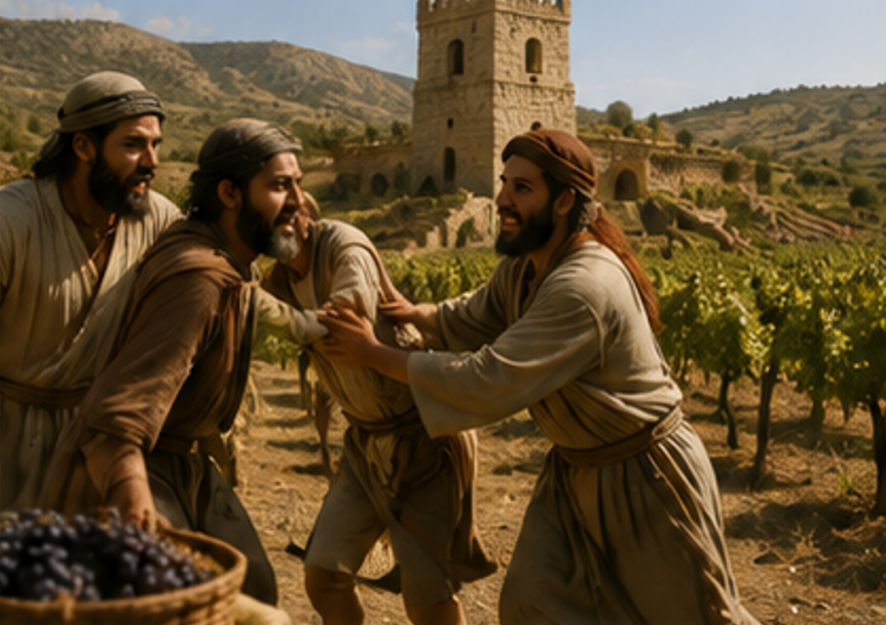
Hear ye another parable. There was a certain householder, who planted a vineyard, and made a hedge round about it, and dug in it a press for the wine, and built a tower, and let it out to husbandmen, and went into a far country.
The Story: A landowner plants a vineyard and rents it to tenants. When he sends servants to collect the harvest, the tenants beat and kill them. Finally, the landowner sends his son, but the tenants kill him too, thinking they can take the inheritance for themselves.
What It Means Today: Jesus warns against rejecting God’s authority and treating what has been entrusted to us as if it belongs entirely to us. The parable calls us to respond faithfully to God’s messengers, recognize Jesus as the Son, and use what we have been given with responsibility rather than selfishness.
Matthew 22:1–14; Luke 14:15–24
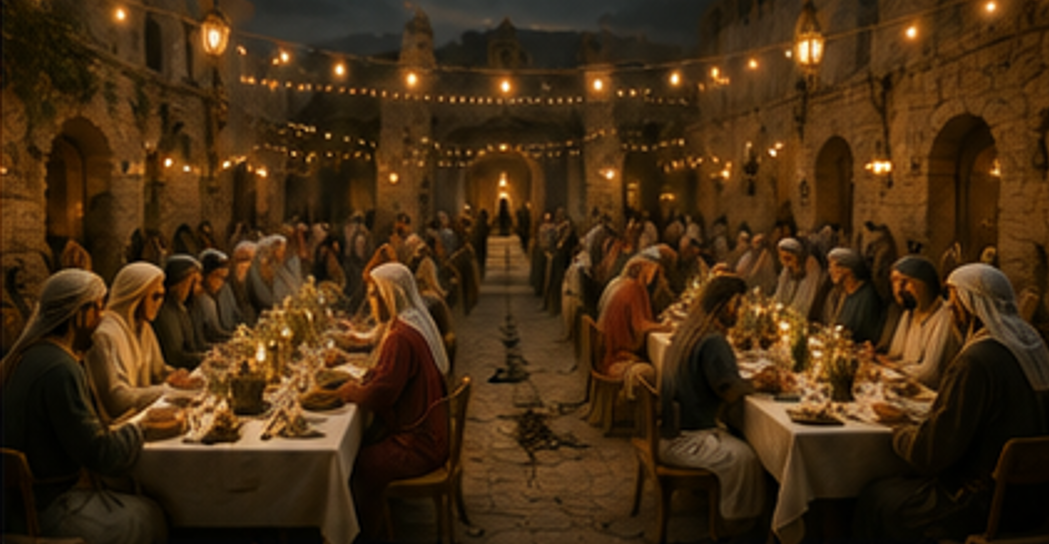
SCRIPTURE :
The kingdom of heaven is likened to a king, who made a marriage for his son. And he sent his servants to call them that were invited to the marriage, and they would not come.
The Story: A king prepares a great wedding feast. Those first invited make excuses or refuse to come, so the invitation is opened to others.
What It Means Today: Jesus warns against taking God’s invitation for granted. The Kingdom is offered generously, but it calls for a genuine response rather than indifference or excuses.

Matthew 24:32–35; Mark 13:28–31; Luke 21:29–33
SCRIPTURE :
And learn a parable from the fig tree: When the branch thereof is now tender, and the leaves come forth, you know that summer is nigh. So you also, when you shall see all these things, know ye that it is nigh, even at the doors.
The Story: When a fig tree begins to sprout leaves, people know that summer is near. Jesus uses this familiar sign as a picture of recognising when the things He has described are drawing near.
What It Means Today: Jesus calls His followers to remain alert and attentive rather than complacent. The lesson is to recognise the signs He gives and remain spiritually prepared.
Matthew 25:31–46
SCRIPTURE :
And before him shall be gathered all nations, and he shall separate them one from another, as the shepherd separateth the sheep from the goats: And he shall set the sheep on his right hand, but the goats on his left.
The Story: Jesus describes a final judgement in which people are separated like a shepherd separates sheep from goats. The difference is revealed by how they treated people who were hungry, thirsty, strangers, naked, sick or imprisoned.
What It Means Today: Jesus identifies Himself with people in need. The teaching makes practical compassion an important test of genuine discipleship.
Mark 1:14–15
SCRIPTURE :
The time is accomplished, and the kingdom of God is at hand: repent, and believe the gospel.
The Story: Jesus begins His public proclamation with a call to repentance and faith because God’s kingdom has drawn near.
What It Means Today: Repentance in Jesus’ teaching is not simply feeling guilty; it means turning around and responding to God’s call. The arrival of the Kingdom demands a response.
Mark 3:23–27; Matthew 12:29; Luke 11:21–22
SCRIPTURE :
No man can enter into the house of a strong man, and rob him of his goods, unless he first bind the strong man, and then shall he spoil his house.
The Story: Jesus answers the accusation that He casts out devils by Beelzebub. He explains that a house divided against itself cannot stand, and uses the picture of a strong man whose goods cannot be taken until he is first bound.
What It Means Today: Jesus is teaching about spiritual authority and the defeat of evil. The image shows that His mission is not working with evil but confronting and overcoming it. It also warns against calling good evil or confusing the source of God’s work.
Mark 4:26-29
Scripture :
So is the kingdom of God, as if a man should cast seed into the earth, and should sleep, and rise, night and day, and the seed should spring, and grow up, whilst he knoweth not. For the earth is of itself fruitful, first the blade, then the ear, afterwards the full corn in the ear. And when the fruit is brought forth, immediately he putteth in the sickle, because the harvest is come.
The Story: A man scatters seed on the ground, and it sprouts and grows without him understanding how; the earth produces the crop on its own, and he only steps in at harvest time.
What It Means Today: This parable highlights the mysterious, self-sustaining growth of God’s kingdom that doesn’t depend on human effort or understanding to keep working. Once the seed (the message) is planted, it grows according to its own hidden process. It’s a reminder that not everything worthwhile can be controlled or fully understood as it develops; sometimes the right response is patience and trust in a process already set in motion, rather than anxious micromanagement.
Mark 7:14–23; Matthew 15:10–20
SCRIPTURE :
Hear ye me all, and understand. There is nothing without a man that entering into him can defile him: but the things which come from a man, those are they that defile a man. For from within, out of the heart of men, proceed evil thoughts, adulteries, fornications, murders, thefts, covetousness, wickedness, deceit, lasciviousness, an evil eye, blasphemy, pride, foolishness. All these evil things come from within, and defile a man.
The Story: Jesus tells the crowd that a person’s deepest uncleanness does not come simply from what enters the body from outside. He points instead to what comes from within the human heart and lists the sinful attitudes and actions that can emerge there.
What It Means Today: Jesus directs attention to the source of our behaviour. External appearances and rules are not enough if the heart remains unchanged. The teaching calls for honest examination of our motives, thoughts and choices.
Mark 12:41–44
SCRIPTURE :
And Jesus, sitting over against the treasury, beheld how the people cast money into the treasury, and many that were rich cast in much. And one poor widow coming, she cast in two mites, which make a farthing. And calling his disciples together, he saith to them: Amen, I say to you, this poor widow hath cast in more than all they who have cast into the treasury.
The Story: Jesus watches people putting money into the temple treasury and notices a poor widow who gives two small coins.
What It Means Today: Jesus measures generosity not simply by the amount given but by the sacrifice and love behind the gift. A small gift can be great in God’s eyes when it is given sincerely and sacrificially
Luke 11:5-8
Scripture :
Which of you shall have a friend, and shall go to him at midnight, and shall say to him: Friend, lend me three loaves, because a friend of mine is come off his journey to me, and I have not wherewith to set before him?
The Story: A man goes to a friend’s house at midnight to ask for bread to feed an unexpected guest. Though the friend is reluctant because it’s late, he eventually gets up and gives him what he needs simply because of his persistent asking.
What It Means Today: This is a teaching on persistence in prayer. Jesus is arguing from a lesser case to a greater one: if even a reluctant friend responds to persistent asking, how much more will God, who is generous and not reluctant, respond to persistent prayer. It encourages boldness and perseverance rather than giving up after an unanswered request.
Luke 12:16-21
Scripture :
The land of a certain rich man brought forth plentifully. And he thought within himself, saying: What shall I do, because I have no room where to lay up my fruits? And he said: This will I do: I will pull down my barns, and will build greater, and into them I will gather all things that are grown to me.
The Story: A wealthy man’s land produces such an abundant harvest that he decides to tear down his barns and build bigger ones to store it all, planning to relax and enjoy his wealth for years. That same night, he dies, and his stored-up wealth is left to someone else.
What It Means Today: This is a warning against building your life around accumulating wealth and material security while ignoring your relationship with God and the shortness of life. The man’s fatal mistake wasn’t wealth itself, but treating it as the ultimate goal and a guarantee of a secure future, forgetting that life itself isn’t something money can secure. It’s a call to be “rich toward God” rather than simply rich in possessions.
Luke 13:6-9
Scripture :
A certain man had a fig tree planted in his vineyard, and he came seeking fruit on it, and found none. And he said to the dresser of the vineyard: Behold, these three years I come seeking fruit on this fig tree, and I find none. Cut it down therefore; why cumbereth it the ground?
The Story: A man has a fig tree in his vineyard that has produced no fruit for three years. The owner wants it cut down, but the gardener asks for one more year to care for it and give it another chance to bear fruit.
What It Means Today: Jesus combines patience with a call to change. God gives us opportunities to grow and bear good fruit, but those opportunities should not be taken for granted.
Luke 15:8-10
Scripture :
Or what woman having ten groats, if she lose one groat, doth not light a candle, and sweep the house, and seek diligently, till she find it? And when she hath found it, call together her friends and neighbours, saying: Rejoice with me, because I have found the groat which I had lost.
The Story: A woman has ten coins and loses one. She lights a lamp, sweeps the house and searches carefully until she finds it, then celebrates with her friends and neighbours.
What It Means Today: Jesus shows the value of every individual person. What seems small or easily overlooked to us can be precious, and finding what was lost is a reason for genuine joy.
Luke 15:11-32
Scripture :
A certain man had two sons. And the younger of them said to his father: Father, give me the portion of substance that falleth to me. And he divided unto them his substance.
The Story: A younger son leaves home, wastes his inheritance and falls into poverty. He returns expecting only to be treated as a servant, but his father welcomes him with compassion and celebrates his return.
What It Means Today: Jesus presents God’s mercy as greater than our past failures. Genuine repentance opens the way back to God, and forgiveness is something to celebrate rather than resent.
Luke 16:1-13
Scripture :
There was a certain rich man who had a steward: and the same was accused unto him, that he had wasted his goods. And he called him, and said to him: How is it that I hear this of thee? give an account of thy stewardship: for now thou canst be steward no longer.
The Story: A manager who is about to be fired for mismanaging his master’s property secures his future by settling accounts with his master’s debtors at a discount, making them indebted to him instead. His master ends up praising him for his shrewdness, though not his dishonesty.
What It Means Today: This is one of Jesus’s more puzzling parables. The point isn’t to praise dishonesty, but to hold up the manager’s shrewd, forward-thinking use of resources as an example: he acted decisively to secure his future using what was at hand. Jesus uses this to challenge his followers to be just as intentional and resourceful with their resources for spiritual and eternal purposes as worldly people often are for merely temporary gain.
Luke 16:19-31
Scripture :
There was a certain rich man, who was clothed in purple and fine linen, and feasted sumptuously every day. And there was a certain beggar, named Lazarus, who lay at his gate, full of sores, desiring to be filled with the crumbs that fell from the rich man’s table.
The Story: A wealthy man lives in luxury while ignoring a poor, sick beggar named Lazarus at his gate. Both men die; Lazarus is comforted in the afterlife while the rich man suffers, and the rich man’s request to warn his living brothers is denied.
What It Means Today: This is a stark warning about the consequences of ignoring the suffering of those in need right in front of you, especially when you have the means to help. It reverses the fortunes of this life in the next, challenging the assumption that wealth is a sign of favor and poverty a sign of disfavor. The ending, where the rich man’s brothers won’t be convinced even by someone rising from the dead, underscores that people who are unwilling to listen to clear moral teaching won’t necessarily be persuaded by a miracle either.
Luke 18:1-8
Scripture :
There was a judge in a certain city, who feared not God, nor regarded man. And there was a certain widow in that city, and she came to him, saying: Avenge me of my adversary.
The Story: A widow repeatedly appeals to an uncaring, unjust judge for justice against her adversary. Though the judge doesn’t care about her at first, he eventually grants her request just to stop her from wearing him out with her persistence.
What It Means Today: Like the friend at midnight, this is a lesson on persistent prayer. Jesus argues that if even a corrupt, indifferent judge eventually gives in to persistence, God, who is just and cares deeply, will surely respond to his people’s persistent cries for justice. It’s an encouragement not to lose heart or give up praying, even when an answer seems slow in coming.
Luke 18:9-14
Scripture :
Two men went up into the temple to pray: the one a Pharisee, and the other a publican. The Pharisee standing, prayed thus with himself: O God, I give thee thanks, that I am not as the rest of men.
The Story: A Pharisee prays boastfully, thanking God that he isn’t like other sinners and listing his own religious achievements. A tax collector, standing at a distance, simply asks God for mercy, admitting he’s a sinner. Jesus says the tax collector, not the Pharisee, went home justified before God.
What It Means Today: This directly confronts self-righteousness and spiritual pride. The Pharisee’s prayer is really about himself and his own accomplishments; the tax collector’s is genuinely humble and honest about his need. Jesus is teaching that humility and honest acknowledgement of one’s own shortcomings matter far more to God than outward religious performance or a sense of moral superiority over others.
John’s Gospel never uses the word “parable.” Instead of short story-comparisons, it records a series of extended, first-person metaphors, often built around Jesus’s “I am” statements, along with a few longer figurative discourses.
Scholars debate whether these count as parables at all. Some treat them as a related but distinct genre; others include them because they function the same way a parable does, using an ordinary image (bread, light, a shepherd, a vine) to reveal something about who Jesus is and what he offers. They’re included here for completeness, since the spirit and teaching purpose are the same even though the form is different.
John 6:25-59
Scripture :
I am the bread of life: he that cometh to me shall not hunger: and he that believeth in me shall never thirst.
The Story: After feeding a large crowd with a few loaves and fish, Jesus tells the people that just as physical bread satisfies physical hunger, he himself satisfies a deeper hunger. He says that whoever comes to him will never truly go hungry and whoever believes in him will never truly thirst.
What It Means Today: Jesus is contrasting temporary, physical satisfaction with a lasting, spiritual one. The crowd wanted more free food; Jesus redirects them toward what he says will actually sustain them long-term. In modern terms, it’s a challenge to stop chasing whatever provides only momentary relief or gratification and instead look for what actually nourishes a person at the deepest level.
John 8:12, John 9:5
Scripture :
I am the light of the world: he that followeth me, walketh not in darkness, but shall have the light of life.
The Story: Jesus declares that whoever follows him will never walk in darkness but will have the light of life, illustrating this claim shortly afterward by healing a man born blind.
What It Means Today: Light versus darkness is used throughout John’s Gospel to represent truth, understanding, and moral clarity versus confusion, ignorance, and wrongdoing. Jesus is claiming to be the source that lets people see clearly, both morally and spiritually. It’s an image of guidance: following him is presented as the way to avoid stumbling through life without direction.
John 10:1-10
Scripture :
I am the door. By me, if any man enter in, he shall be saved: and he shall go in, and go out, and shall find pastures.
The Story: Jesus describes himself as the gate through which sheep enter a sheepfold safely. Anyone who tries to get in some other way, he says, is a thief or a robber, but whoever enters through the gate will be kept safe and will find good pasture.
What It Means Today: This is about legitimate access and protection. In an agricultural setting, a gate controlled who and what could get to the flock. Jesus is claiming to be the sole legitimate access point to safety and provision, contrasted with false leaders or shortcuts that only exploit or endanger people. It’s an image of trustworthy, secure belonging versus exploitation.
John 10:11-18
Scripture :
I am the good shepherd. The good shepherd giveth his life for his sheep. But the hireling, and he that is not the shepherd, whose own the sheep are not, seeth the wolf coming, and leaveth the sheep and fleeth.
The Story: Jesus contrasts himself with a hired hand who abandons the sheep when danger comes. The good shepherd, by contrast, knows his sheep individually and is willing to lay down his life to protect them.
What It Means Today: This builds directly on the earlier image of the gate. It’s about the difference between someone who cares only because they’re paid to and someone whose care is genuine and personal, even to the point of self-sacrifice. It’s a picture of committed, personal leadership and protection, rather than leadership that abandons people the moment it becomes costly or dangerous.

John 11:1-44 (spoken in verse 25, in the context of raising Lazarus from the dead)
Scripture :
I am the resurrection and the life: he that believeth in me, although he be dead, shall live: And every one that liveth, and believeth in me, shall not die for ever.
The Story: Speaking to Martha shortly before raising her brother Lazarus from the dead, Jesus tells her that whoever believes in him will live even after death, and whoever lives and believes in him will never truly die.
What It Means Today: This statement, paired with the miracle that immediately follows it, is a claim about power over death itself, not just a comforting sentiment but something Jesus demonstrates on the spot. It reframes death as not the final word for someone connected to him. It’s often read as one of the most direct claims to divine authority in the Gospel.
John 14:1-6
Scripture :
I am the way, and the truth, and the life. No man cometh to the Father, but by me.
The Story: Comforting his troubled disciples the night before his crucifixion, Jesus tells them not to be afraid, and says that no one comes to the Father except through him.
What It Means Today: This is a claim of exclusivity and reliability: Jesus presents himself not merely as someone who points toward truth, but as the actual path, the substance of truth, and the source of life itself. In context, it’s meant to be reassuring in the face of fear and uncertainty about what comes next, offering a single, dependable point of orientation rather than leaving the disciples to find their own way.
John 15:1-17
Scripture :
I am the true vine; and my Father is the husbandman. Every branch in me, that beareth not fruit, he will take away: and every one that beareth fruit, he will purge it, that it may bring forth more fruit.
The Story: Jesus describes himself as a vine and his followers as branches. A branch that stays connected to the vine bears fruit; a branch cut off from the vine withers and is good for nothing but being burned.
What It Means Today: This is about dependence and fruitfulness. The image argues that meaningful, lasting results in a person’s life come only from staying closely connected to Jesus, not from independent effort. Cut off from that connection, all the striving in the world won’t produce anything of real, lasting value. It’s a call to abide, to stay rooted, rather than trying to bear fruit on your own strength.